"It's unlike any mecha we've seen before."
This was the slogan Rooster Teeth (of RWBY fame) is using to promote their now airing series 'Gen: Lock'. Creator and series director Gray Haddock cites the works of Gen Urobochi (Thunderbolt Fantasy, Madoka Magica), and mecha/sci-fi shows like Gundam and Ghost in The Shell as inspirations. Having said that, the mecha community ridiculed the series over its slogan and its trailer, myself included, as there wasn't much in it that distinguishes itself from other mecha shows like Gundam, or Macross, or others such as Code Geass or Getter Robo. And given the reputation sites like Polygon have, it's hard to take their reviews of Gen: Lock seriously.
Another is a more personal reason - I never really liked RWBY. While I am aware of the critical and commercial success it has made over the years, it's one of those that for one reason or another, I could never jump into and enjoy (Clone Wars also comes to mind). I also have this mentality that promoting an animated series or film by having a celebrity do voice-acting is more of a marketing ploy to get people to watch it, rather than picking them because their voice-acting is as good as when they do act on camera. So as I begin diving into the first two episodes of Gen: Lock, I have low expectations of it.
Truth be told, it’s not bad so far. There are still a number of issues it has though. For the purpose of this review, I will compare it with other mecha anime that I’ve seen over the years, from Astro Boy, to the original Mobile Suit Gundam, to Darling in The Franxx.
The one thing shows like Gundam and Macross have done so well is that when it comes to a war between two or more factions, they give you a quick glance as to what is going on before we are introduced to the main cast. But for the first two episodes of Gen: Lock, we don’t get anything as to what’s going on. Instead, we are introduced to the protagonist Julian Chase (Michael B. Jordan) and his relationship with Miranda Worth (Dakota Fanning) before he gets shoved into battle with a faction known as the Union, gets killed, and comes back years later as part of a secret project on piloting experimental mechs known as Holons. And after two episodes, we STILL don’t know what’s up with the war between the two factions other than one of them being portrayed as the bad guys.
Now let’s talk about these ‘Holons’. They are your typical Real Robot-type (mechs used mainly for warfare) combat units found in Gundam and Macross. The difference lies in that there is no human pilot, and instead the pilot’s own consciousness is uploaded to the Holon to control it (think James Cameron’s Avatar). I’m guessing this is what the show’s slogan meant as I personally cannot recall a mecha series with a similar concept. The closest would be Tetsujin 28 (Gigantor in the US) where the title mech is controlled via remote control, and the first of its kind.
I wasn’t too keen with the mecha designs of the Holons as they look more like the Armor Slaves found in Full Metal Panic. That said, the Opening Animation that reveal the Holons will be upgraded with unique abilities and weapons. So there is some promise the Holons will look good in combat. The other mechs found in Gen: Lock are mainly generic and none of them stand out or even memorable.
As for the characters, the first two episodes didn’t bring much reason for me to actually care for them. Again, like Gundam and Macross, we are given protagonists who are given a reason to fight, with enough character and charm to connect to them as soon as possible. Chase lacks such characterization that I don’t connect with him at all. Hopefully the later episodes explore his character, as will the rest of the cast. The performances of the celebrities aren’t bad.
One voice actor that really surprised me was the inclusion of Koichi Yamadera as Kazu Iida, one of the 5 Holon pilots who hails from Japan (the series has a diverse cast). Anime fans know Yamadera as the Japanese voice of Spike Spiegel from Cowboy Bebop, and more recently as the voice of Beerus in Dragon Ball Super. Unless I’m mistaken, this is Yamadera’s first participation in an American produced series. His character doesn’t speak English, though for some strange reason, he understands it when spoken to. It’s just as weird that he speaks Japanese and everyone gets it.
There really isn’t much for me to say with regards to the animation since it used the same style as found in RWBY. I’ve pretty much grown accustomed to it thanks to Knights of Sidonia, and more recently with Netflix’s Godzilla Trilogy.
Within all this slew of animated shows, Gen: Lock will have to offer something more than what it currently has to stand out from the rest of the crowd. It hasn’t done so yet. But it does have plenty of episodes to prove itself. On a scale of 1 to 5, I give the first two episodes of Gen: Lock a 2 out of 5.
Showing posts with label mecha. Show all posts
Sunday, February 3, 2019
Sunday, February 18, 2018
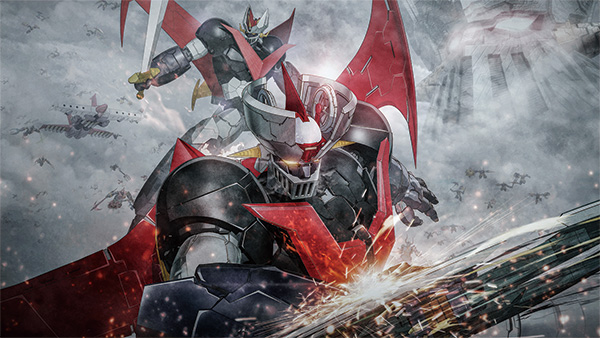
Mazinger Z INFINITY Film Review
In case you don't know Mazinger Z, it is the first work of its kind that feature the concept of a giant robot with a human pilot. It's why we had Voltron, Gundam, Sym-Bionic Titan, and pretty much every other giant robot show that you know of. Mazinger Z did came out in English under the name "Tranzor Z", but it's a heavily butchered version of the original series.
The plot of Mazinger Z goes like this: A young teenager named Koji Kabuto pilots his late grandfather's invention - the giant robot Mazinger Z, to do battle against the mad scientist Dr. Hell, who plans to conquer the world with his army of giant robots called the "Kikaiju", which translates to 'Mechanical Beasts', or for a more literal term 'Robot Beasts' or 'Ro-Beasts', just like the ones in Voltron.
92 episodes later (plus an additional 56 more episodes from the sequel series Great Mazinger), Koji successfully takes out Dr. Hell for good. Mazinger Z Infinity takes place 10 years after the fall of Dr. Hell and the world experienced a moment of peace. Koji follows his grandfather's footsteps and becomes a science researcher. When Dr. Hell suddenly comes back from the dead and attacks the world, a new Mazinger discovered in Mt. Fuji, and a mysterious woman named Lisa being the key to all of this, Koji must pilot Mazinger Z for one final mission to save the world once again.
First off, let it be known that the film is made specifically for fans of the original Mazinger Z series from 1972, as well as its sequel Great Mazinger. This is mainly because the movie has zero time to provide a quickstart on the franchise's lore and just puts everything there, assuming the audience already knows what they are. So this is not, in any shape or form, an entry point for newcomers to the Mazinger franchise.
And that's actually quite the downer with this movie because unless you're knowledgeable about the franchise, you'll be almost out of the loop with the movie's plot. I due recommend before going into this film that, if you do not have the time or access to watch the orignal Mazinger Z series, then watch either MazinKaiser from 2001, or Mazinger Edition Z: The Impact from 2009. Both follow the same basic premise of the original Mazinger Z series, though taken to different directions, but it at least gives you the basic idea of the show's lore.
I have grown up watching Mazinger Z as it's one of the earliest anime I've gotten into. So yes, Mazinger Z Infinity does bring up a lot of nostalgia of my love for the franchise. But it's not without its problems.
I personally have a negative look towards CG animation because as cool looking as they are, come back a decade or so and they won't look as good anymore. 2D animation has a better chance of aging well than 3D animation. With that being said, the CG animation in the film is cool looking and makes the action sequences very appealing, but I don't think it will age well many years down the line. It doesn't help either that there were moments the CG scenes tend to get choppy, it's as though I was watching the 2011 version of the Thundercats, where it had that very issue back then. It is 2018 and I expect 3D animation to be better looking and more fluid.
Hiroya Iijima serves as character designer for Mazinger Z Infinity, and in his interview, he wants his own interpretation of the characters, and not trying to be too close to the original designs made by Go Nagai. Iijima previously did character designs for Afro Samurai, but is better known in providing Key Animation sequences for Bleach, Dragon Ball Z, Iron-Blooded Orphans, and Saint Seiya. The latter more especially because the characters in Mazinger Z Infinity do look a lot more like Saint Seiya characters than Mazinger characters. I don't blame Iijima for his designs, but imagine if Akira Toriyama does the character design instead and you can see how awkward it's going to be given that Toriyama's style is more associated with Dragon Ball than anything else.
If there is one thing that I really disliked most of the movie, is in the middle part, when the action stops and the plot has slowed to a crawl in favor of social commentary. Thing is, Devilman Crybaby already tackled that subject and did it 100 times better than Mazinger Z Infinity. Having to tackle to it again in Mazinger for 20+ minutes got me so bloody bored I nearly dozed off! I also don't like the idea of putting in characters that have absolutely nothing to do with the movie's plot and is only there as mere fan-service.
Without putting in any spoilers, the explanation as to what is going on ends up adding a number of plot holes as far as overall lore of the franchise is concerned. Mazinger Z has a complicated history behind the scenes of which I will not elaborate in this review. But the best I could say is that Mazinger Z Infinity is Toei's attempt to "set the record straight" in a sense.
During the interview segment at the beginning of the film, when asked what the theme of the movie is, director Junji Shimizu (who previously worked on One Piece and Dragon Ball Super) stated the theme is "entertainment". Well, if a 20-minute soap opera on social commentary is part of their definition of "entertainment", he and the rest of the staff have gone mental.
That being said, the action sequences of the movie are its true highlights. Seeing Mazinger Z (and Great Mazinger) decimate hordes of enemy mechs got my blood heating up with excitement. This is essentially what made Mazinger Z a groundbreaking series back in the day that would spawn every other mecha show since. And this is what I really want out of this sequel film. The movie doesn't need social commentary or anyhting like that. Just throw in all the action in there and I'd be really happy about it. But that is not the case.
Don't get me wrong, though. Mazinger Z Infinity is by no means a bad film and I do enjoy it in part due to nostalgia. It's just that the drama and whatnot thrown in is not only unnecessary, it also drags it down from being a really great film to watch. Nevertheless, the movie is to celebrate franchise's mark in history in what made giant robots cool like we know now today, and it deserves to receive that credit and respect. On a scale of 1 to 5, I give Mazinger Z Infinity, 3 Rocket Punches out of 5
Wednesday, December 13, 2017
Megaman in Super Robot Wars?!
Just woke up this morning to find out about this: Rockman (Megaman to you 'Murricans) is officially added to the Super Robot Wars X-Omega game and will make its debut in January.
FYI: Super Robot Wars is a crossover video game franchise featuring various mecha anime that spans from the 60s until today. Notable mecha anime included in the games are GoLion (Voltron), Macross (Robotech), the Gundam franchise, Code Geass, The Big O, Evangelion, and Gurren Lagann. More recently, the franchise expanded itself to include mecha featured in games, manga, toys, and even live-action. Series such as Virtual-On, Xenogears, Zyuranger (Mighty Morphin' Power Rangers) and even Godzilla vs Mechagodzilla are officially included. Despite the franchise being exclusively available in Japan, Super Robot Wars has an international fanbase.
A few days ago, Super Robot Wars X is announced for the PS4 and PS Vita to be released in 2018 and will feature characters from Gundam Wing, Nadia: Secret of Blue Water, Cross Ange, and Buddy Complex, among others. And English version of the game is announced for Asian countries.
Super Robot Wars X-Omega, which will feature Megaman in January, is available only in Japan for the iOS and Android.
Official English Trailer for SRW X for the PS4/Vita
Friday, August 11, 2017
Voltron: Legendary Defender Season 3 Review
In case you missed it, Voltron: Legendary Defender came out last week in the US on Netflix. To my surprise, the third season's number of episodes was shorter, with just 7 episodes total. However, the 4th Season is said to be coming this October, which is two months from now as of this recording. I had the feeling Netflix is taking cues from Cartoon Network and started splitting episodes just because.
When I learned that the series will have 78 episodes total, I was both surprised and a bit concerned. It's because it's been awhile since we had an action-oriented animated series with an ongoing story arc that lasted for more than 50 episodes. In Japan, most anime wrap themselves up between 12 and 24 episodes. Sure, we have Dragon Ball Super and One Piece who are well beyond the 100 episode mark. But look up the rest of the pack and you will notice a number of them don't last that very long.
Of course, the US has a number of animated shows that go beyond 50 episodes, but that's mainly because the episodes themselves have almost no overarching plot. Even Batman: The Animated Series and Samurai Jack have mainly standalone episodes and only a number of them are part of a major story arc. The last series I can remember where you have to watch the show where it's an ongoing arc from beginning to end would be the Avatar franchise. Unless I am mistaken, there's only like a couple of episodes where it is a standalone, or a recap episode of sorts.
Long story short, I was expecting Voltron: Legendary Defender to wrap itself up after 3 seasons. But if the show is to have 78 episodes total, I just wonder how they can keep the show going without appearing like it's dragging itself for too long.
Anyhow, the main plot of the 3rd season of Legendary Defender can be divided into three parts - the search for the missing Shiro, who disappeared at the end of Season 2; the eventual transition of the pilots to the status quo we know from the original Voltron and GoLion anime; and the team's battle with Lotor. With this season only 7 episodes long, these major arcs get resolved rather quickly.
The search for Shiro was pretty much resolved within two episodes total, mainly in episodes 1 and 5. The first episode has Keith and the team desperately looking for Shiro. At the same time, within the span of 3 episodes, Keith and the gang would transition into the Voltron team we all know. I had no issues with the transition as it went smoothly and feels natural. Keith still has his hot-headedness, but he slowly shows markings of being a leader, just as Shiro wanted him to be.
Shiro's arc is exclusively in the 5th episode, as we see what became of him after Season 2, and eventually reuniting with the team. At that point, he can no longer pilot the Black Lion, as Keith is now it's new.....owner? Master? Anyhow, he does replace Allura's post as he commandeers the castle with Coran.
That being said, the episode slightly reveals that Shiro is more than he appears to be. As Shiro makes his escape from Galran captivity, he had a vision of him being subject in a series of experiments as part of "Operation: Kuron", highly implying Shiro is unknowingly playing as a sleeper agent for the Galra. Does that mean he will eventually betray the team? And what then? We will not know until many episodes later, not necessarily the next season.
I really do like the way Lotor is written in Legendary Defender. He is shown to be far more cunning and skilled than his Defender of The Universe counterpart, and has proven to be just as much an arch-enemy to the Voltron team as Zarkon. While he and Zarkon have the same goal of ruling the universe, Lotor's way of ruling differ from his father's that the two have an estranged relationship. Lotor also has an entourage of female Galra fighters by his side who are just as fearless as they are loyal, if not enamored to him.
I did not expect the series to play the multiverse card and that Voltron's origins and power stems from an ore that travels through alternate realities. The Quintessence, which is the power source of Voltron and Zarkon, actually originated from another dimension. Zarkon becoming a bad guy was mainly due to the overexposure of the Dark Quintessence that corrupted him and his wife Honerva, now the witch Hagar.
At this point, Zarkon's obsession with the Black Lion and Voltron now makes a lot of sense. Zarkon needs Voltron to open up the rift and extract the Pure Quintessence for himself. Lotor has the same idea and is following through with his plan. Though I do wonder if Lotor is also aware of his parents being corrupted by the Dark Quintessence and if it's a possibilty that he plans to use the Pure Quintessence to cure them. Or maybe he really just wants it for himself. Who knows?
Going back to the multiverse concept, although subtle and doesn't really say much, I get the impression that Voltron: Legendary Defender is not a reboot of the original Defender of The Universe series. Think something like the Powerpuff Girls or the Ben 10 reboots in which they are in actuality continuations of their past shows. In the case of Legendary Defender, the multiverse concept suggests the previous Voltron shows exist in other realities that are tied to the universe in Legendary Defender.
In episode 4, when the Voltron team entered an alternate universe where the Alteans are the bad guys, they encounter Sven, who is that universe's version of Shiro. Obviously, the Sven character is a reference to the original Sven in Defender of The Universe. But thanks to the multiverse concept, it could also mean that Sven in Legendary Defender is also a counterpart to the original Sven in Defender of The Universe.
I highly doubt that Legendary Defender will go far enough that the characters would cross over with the previous Voltron incarnations, let alone the GoLion anime. But it would be interesting to see if the two Pidges from Defender of The Universe and Legendary Defender meet and how they would interact, given that they have opposite genders. Hell, if Legendary Defender can somehow use the multiverse concept to introduce the Vehicle Team Voltron aka Dairugger, or the Gladiator Voltron aka Arbegas, I'd have them take my money along with my Netflix subscription.
Although short at 7 episodes, the third season of Voltron: Legendary Defender does a lot better than the last one. And I admit, I was wrong about the dragging part. The series has a lot of stories to tell and the writers did a very good job keeping it interesting and the viewer engaged in its plot. In the end, I am left vey satisfied overall and looking forward to its next season. On a scale of 1 to 5, I give the 3rd Season of Voltron: Legendary Defender, a 4 out of 5.
Tuesday, April 25, 2017
POWER RANGERS IN AN SRW GAME
Bandai Namco has recently announced that the May update for their Super Robot Wars SRW X-Ω (Cross Omega) mobile game will feature the Daizyujin from Kyoryu Sentai Zyuranger. American fans will know this as the first season of Mighty Morphin' Power Rangers. It is worth noting however, that Zyuranger's debut it part of a special collaboration event and is only available for a limited time.
This is the first time a Super Sentai/Power Rangers series has appeared in an Super Robot Wars game (SRW for short), as the franchise is often restricted to mecha like Gundam, Macross, Gurren Lagann, Evangelion, etc. However, since its debut in Japan for smartphones in 2015, the X-Omega game has featured various shows normally not within the mecha genre, including Crayon Shin-chan, the Idolmaster, and Godzilla.
Historically, the Super Sentai series did appear in one crossover back in the Famicom (the Japanese NES). SD Battle Oozumo was sumo wrestling game featuring characters from Ultraman, Kamen Rider, Gundam, and Super Sentai (specifically Turbo Ranger, Liveman, Flashman, and Jetman. All four predate Zyuranger).
Zyuranger will make its grand debut in SRW X-Omega in May for the iOS and Android.
About Super Robot Wars -
Originally released for the Game Boy in 1991, Super Robot Wars is a long-running video game crossover franchise featuring various mecha anime. Players take the role of their favorite anime mecha from various shows like Code Geass, Full Metal Panic, The Big O, GoLion (Voltron in the US), Eureka Seven, and many more, while fighting enemies in a Turn-Based Strategy game similar to Nintendo's Fire Emblem series. Its most recent game, Super Robot Wars V, was released in early 2017 for the PS 4 and PS Vita. It is also the first in the series where it has been released in English (although only for Asian countries).
Labels:
Anime,
Gaming,
mecha,
News,
Power Rangers,
SRW,
Super Robot Wars,
Super Sentai
Tuesday, March 7, 2017
Teaser images for Toei's "Mazinger Z" movie
Club Dynamic, a fan club of the works of Go Nagai, has shown on their Facebook Page the following teaser images of the upcoming Mazinger Z movie by Toei. I cannot personaly confirm these, but if they are indeed true, it's impressive.
About Mazinger Z - Created by Go Nagai and originally published in Weekly Shonen Jump in October of 1972, Mazinger Z is about a teenager named Koji Kabuto, whom after learning his grandfather is killed by a mad scientist who wants to rule the world, must pilot his grandfather's invention - a giant robot designed to combat the mad scientists army of mechanical beasts. The manga would later be adapted into an anime series in December of the same year, which sparked the Golden Age of Mecha Anime.
About Toei - Toei is one of the oldest and largest animation studios in Japan. Founded in 1948, many consider Toei as the Japanese counterpart to Disney. Toei is responsible for many of the most popular anime that aired over the last 60 years, among them Dragon Ball, One Piece, Digimon, Sailor Moon, Precure, and many others.
About Mazinger Z - Created by Go Nagai and originally published in Weekly Shonen Jump in October of 1972, Mazinger Z is about a teenager named Koji Kabuto, whom after learning his grandfather is killed by a mad scientist who wants to rule the world, must pilot his grandfather's invention - a giant robot designed to combat the mad scientists army of mechanical beasts. The manga would later be adapted into an anime series in December of the same year, which sparked the Golden Age of Mecha Anime.
About Toei - Toei is one of the oldest and largest animation studios in Japan. Founded in 1948, many consider Toei as the Japanese counterpart to Disney. Toei is responsible for many of the most popular anime that aired over the last 60 years, among them Dragon Ball, One Piece, Digimon, Sailor Moon, Precure, and many others.
Subscribe to:
Posts (Atom)